
March 24, 2026
Introduction
3D modeling is fundamental to numerous sectors like architecture, gaming, and automotive design. As AI technologies advance, they become indispensable in enhancing these processes. Designers now harness AI tools to craft complex models with precision and efficiency that traditional methods cannot match. In this article, we unravel the influence of AI on 3D modeling and review the top tools of 2024.

The Role of AI in 3D Modeling
AI dramatically transforms traditional design workflows. By integrating smart algorithms, AI streamlines complex modeling tasks, freeing up creators to focus on innovation. Such enhancements optimize productivity, making AI a cornerstone of modern 3D design. Understanding AI’s impact is essential for leveraging its benefits fully.
Latest AI Technologies Enhancing 3D Modeling
AI technologies are continuously evolving to offer new capabilities. Two predominant advancements include:
Machine Learning Algorithms
Machine learning shapes 3D modeling by adapting through data patterns. It heightens modeling accuracy and provides decision-making insights that guide designers in streamlining complex projects.
Generative Design Innovations
Generative design employs AI for rapid prototyping, enabling designers to explore a vast array of design alternatives swiftly. This approach catalyzes innovation, particularly in architecture and automotive spheres.
Combined, these technologies equip designers with tools to transcend conventional limits. Now, we explore the top AI tools transforming the industry.
Top AI Tools for 3D Modeling in 2024
2024 showcases several AI tools at the forefront of revolutionizing 3D modeling:
Tool 1: Features and Benefits
Tool 1 promotes creative exploration through real-time feedback, enabling instantaneous design adjustments.
Tool 2: Features and Benefits
A standout for efficiency, Tool 2 automates repetitive tasks, significantly shortening design timelines.
Tool 3: Features and Benefits
Known for its precision, Tool 3 leverages AI to minimize errors and refine complex modeling processes.
These tools reflect the peak of AI-powered innovation, equipping designers to redefine creative boundaries. We’ll now compare their benefits to traditional methods.
Comparing Traditional Tools with AI-powered Tools
AI-powered tools offer clear advantages over traditional methods:
- Efficiency: AI drastically cuts design time by automating monotonous tasks, unlike manual processes that are time-intensive.
- Precision: AI algorithms provide superior accuracy, reducing human error in detailed calculations.
Recognizing these differences is crucial for industries contemplating an AI-first approach in their design processes. Next, we examine how AI impacts various sectors.

Industry Applications of AI in 3D Modeling
AI tools enhance capabilities across multiple industries:
Architecture
AI helps architects produce sustainable, visually appealing designs by integrating environmental analytics.
Gaming
AI tools allow game developers to create immersive environments, facilitating faster development of realistic, interactive worlds.
Automotive
In automotive design, AI promotes safer, aerodynamic vehicles, using predictive analytics for innovation.
Each industry benefits uniquely, using these specialized tools to overcome limits and extend design possibilities. Now, let’s consider the challenges and future opportunities.
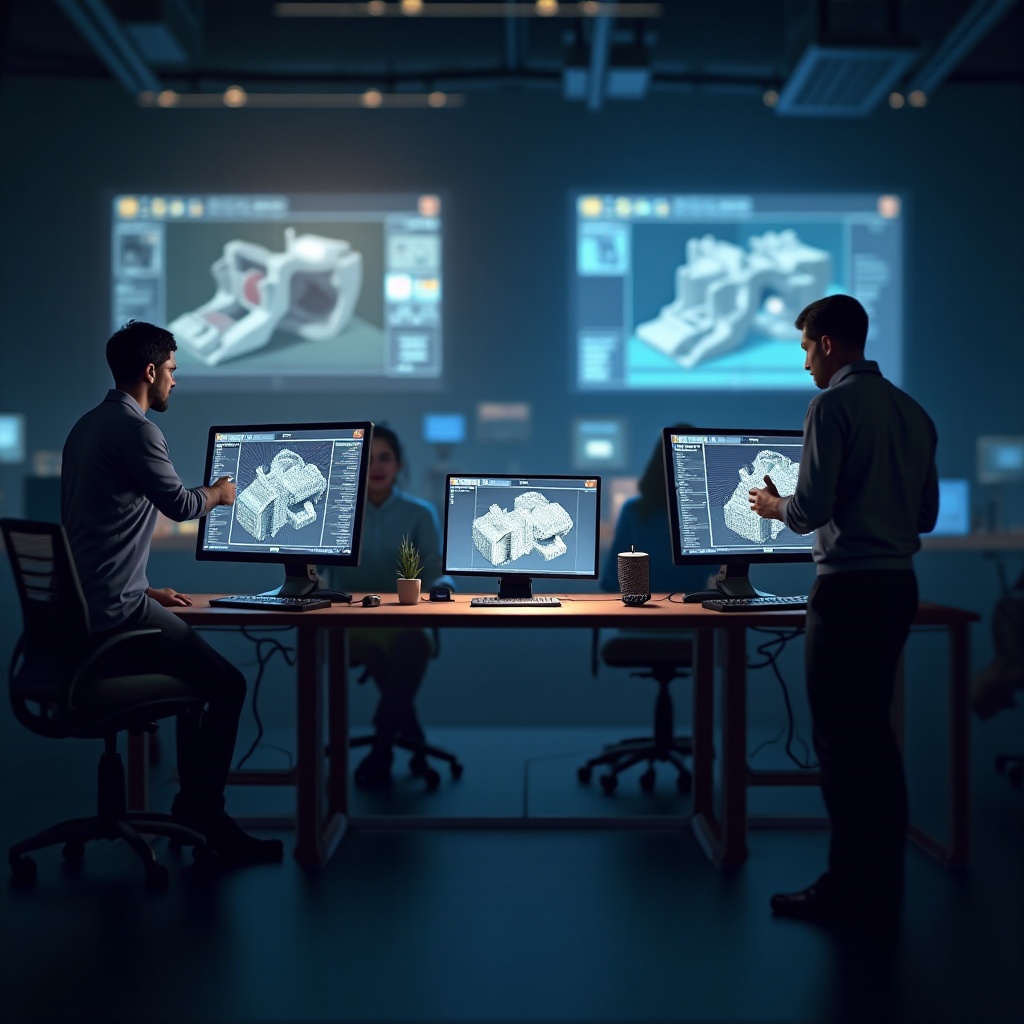
Challenges and Future Opportunities
The integration of AI in 3D modeling presents challenges such as high implementation costs and the demand for skilled operators to utilize these advanced tools. As these barriers are overcome, broader adoption is anticipated in smaller firms and emerging niches.
Looking ahead, data-driven insights and collaborative AI efforts will continue to transform creative processes, achieving new complexities in design that were previously unattainable.
Conclusion
AI tools are pivotal in advancing 3D modeling across industries. Embracing these technologies ensures that designs are cutting-edge and competitive. As AI evolves, it holds tremendous potential for future transformations.
Frequently Asked Questions
What are the top AI tools for 3D modeling in 2024?
Leading tools enable real-time feedback, improve design efficiency, and offer high precision for complex tasks.
How do AI tools improve traditional 3D modeling processes?
AI tools enhance efficiency and accuracy, automating repetitive tasks and reducing human error through advanced algorithms.
What industries benefit the most from AI-enhanced 3D modeling?
Architecture, gaming, and automotive sectors utilize AI to create innovative, efficient, and precise designs.