
December 16, 2025
Introduction
The consulting industry is evolving with the advent of Artificial Intelligence, redefining how businesses approach solutions and strategies. AI tools enhance data-driven insights and operational efficiency, posing the question: Will AI replace human consultants? While AI excels in processing and analysis, human consultants continue to offer essential expertise through personalized engagements and strategic foresight.

Understanding AI Tools in Consulting
AI tools are revolutionizing consulting, providing technologies that streamline processes and amplify productivity. These tools, like IBM Watson and Salesforce Einstein, excel at handling extensive data analytics and forecasting trends, allowing consultants to focus on strategic insights while AI manages operational tasks.
By adopting AI tools, consultants enhance their ability to nurture client relationships and make informed decisions. However, the journey from human-led consultancy to AI-led strategy demands an exploration of AI’s role alongside human expertise.

The Role of Human Consultants in the Digital Age
Human consultants have irreplaceable value despite AI advancements, serving beyond mere execution of tasks—they build relationships, understand complex social dynamics, and manage client perceptions. Human-centric qualities such as intuition, creativity, and empathy are pivotal in connecting clients’ needs with strategic outcomes.
As AI handles data-centric tasks, human consultants optimize client interactions and interpret nuanced information that requires personal judgment and experience. This symbiosis suggests that AI tools complement rather than replace, fostering a dynamic consultancy landscape.
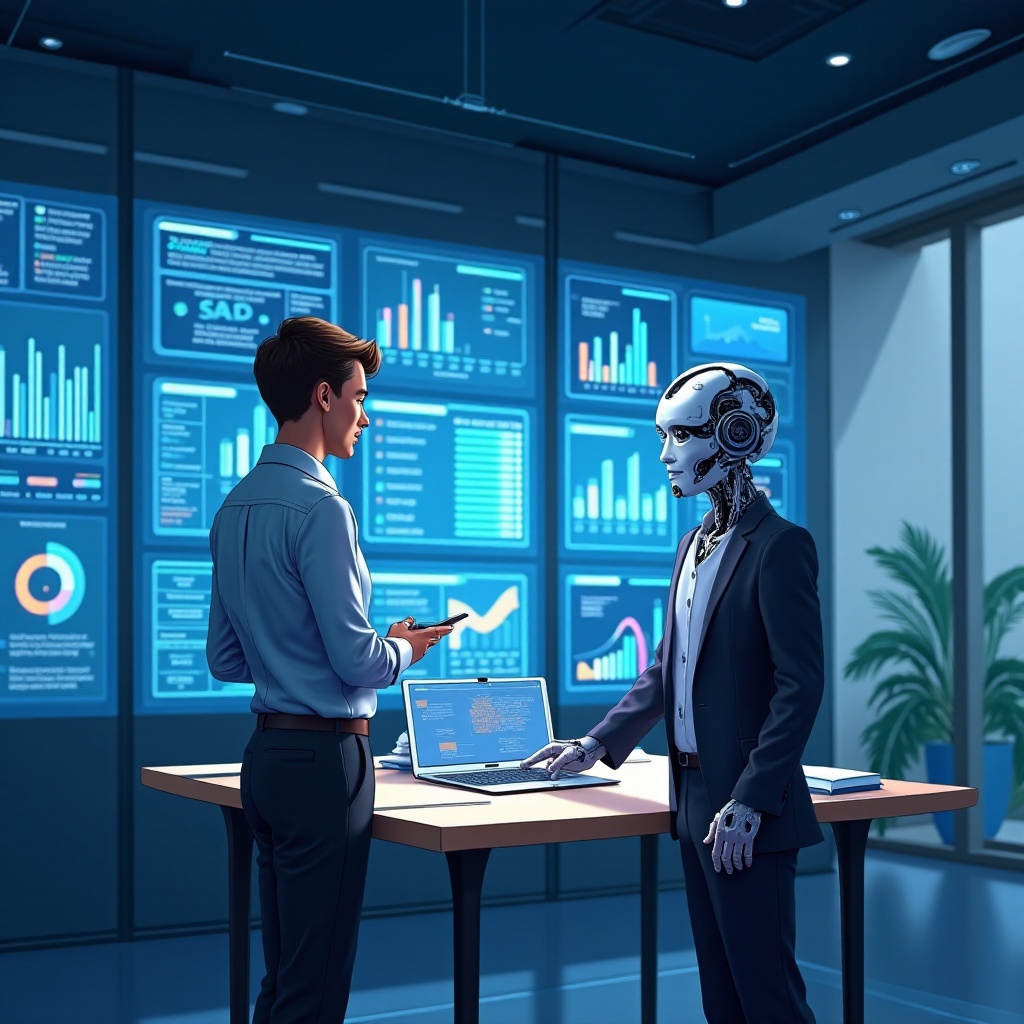
Comparing AI Tools to Human Consultants
The synergy between AI tools and human consultants brings out several insights:
- Advantages of AI Tools:
- Rapid data processing capabilities allow AI tools to identify trends efficiently.
- Automated processes reduce human error, increasing precision and reliability in consulting analytics.
-
Scalability ensures that AI can support large-scale operations across diverse sectors.
-
Limitations of AI in Consulting:
- Lacking creativity and innovation, tasks that demand out-of-the-box solutions are beyond AI’s reach.
- Emotional intelligence is crucial in client-facing roles—AI struggles to replicate such interactions.
- Human oversight is vital to maintain ethical standards and address bias, especially in autonomous decision-making.
AI tools enhance consultancy, but human engagement remains essential for strategic and ethical client solutions.
Case Studies and Real-World Examples
Exploring real-world applications showcases the balance between AI and human consultancy.
-
AI Augmentation in Consulting:
Companies like Deloitte incorporate AI tools to streamline data analysis, redirecting human effort toward client advisory and strategic formulation. AI identifies opportunities, empowering consultants to deliver impactful insights. -
Situations Where Human Consultants Shine:
Firms such as McKinsey leverage human-centric strategies to navigate organizational ecosystems, a realm where human empathy and adaptability are invaluable.
These examples confirm the complementary nature of AI and human consultants, pointing to a collaborative future.
Future Trends: AI and Human Consultants Working Together
The consulting industry is heading towards an integrated future—AI tools working side-by-side with human experts.
-
Hybrid Models:
Organizations are increasingly adopting hybrid models, harnessing AI’s analytical prowess for data-driven strategies while relying on human consultants for strategic oversight. -
Skills Required for Future Consultants:
To remain relevant, consultants must enhance their understanding of AI technologies, data protocols, and ethical considerations. Skills in interpersonal communication and adaptability will ensure successful collaborations.
Human and AI integration promises a future where innovation harmonizes with strategic human insight, benefiting the consulting industry greatly.
Ethical Considerations in AI-driven Consulting
AI’s rise in consultancy demands vigilance around ethical issues such as bias, transparency, and privacy. Human consultants play a critical role in ensuring AI governance aligns with ethical standards, preserving integrity and trust in client relationships.
Navigating ethical complexities necessitates a balance between technological acumen and human judgment. Consultants must ensure AI advancements benefit society, adhering to moral and legal frameworks.
Conclusion
AI profoundly impacts the consulting industry, offering unmatched data processing and automation. However, human consultants remain integral, offering strategic guidance and fostering relationships. The industry’s future lies in blending AI’s capabilities with human insight, forging a path to enriched consultancy services.
Frequently Asked Questions
Can AI completely replace human consultants?
AI enhances consultancy but cannot entirely replace human consultants due to the need for interpersonal skills and innovative thinking.
What skills do consultants need to work with AI tools?
Consultants should develop skills in AI technologies, data analysis, ethics, and interpersonal communication to effectively collaborate with AI.
How is the consulting industry adapting to AI advancements?
The industry is adopting hybrid models that integrate AI with human expertise, optimizing consulting services and ensuring comprehensive strategies.